Charcoal
Fuel
Made: Wood burnt with little air in simple kilns at 300-500 °C, temperature uncontrolled.
Made for: Cooking and heating.
Quality: Unknown feedstock, varies batch to batch, no certificate.
Risks in use: Tars and

Premium biochar from local Ugandan biomass - engineered for healthier soil, thriving livestock and cleaner water.
+20%
Avg. yield uplift
2-3×
Water retention
100yr+
Carbon storage
100%
Sustainably sourced Ugandan biomass

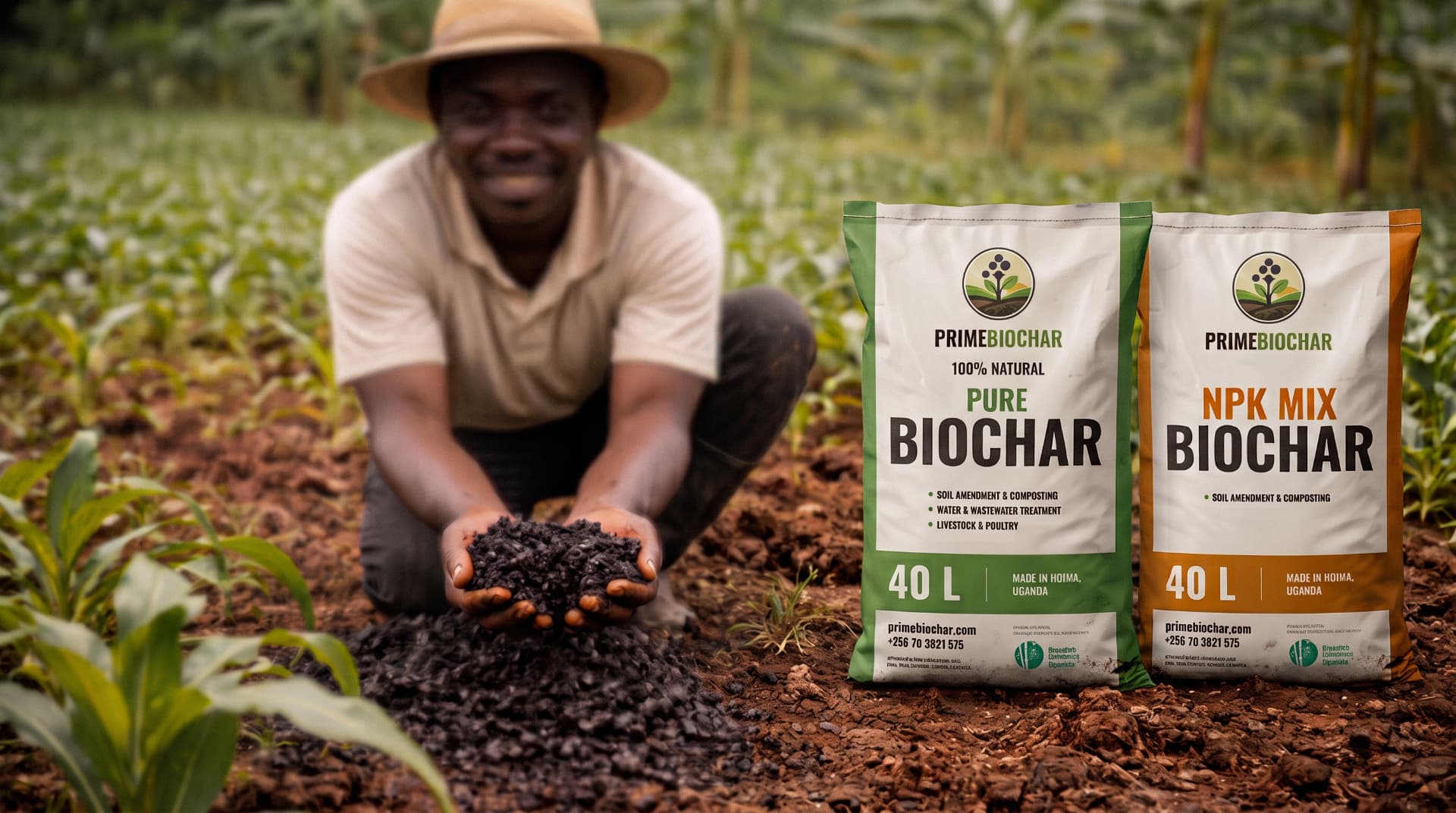
Porous, carbon-rich granules that hold moisture and build fertility - season after season, even through dry spells.
Obulimi obulungi butandikira ku ttaka.
Crop Guides
Peer-reviewed evidence and return-on-investment models for your crop - read the highlights here or download the full brief.

Turn a soil investment into a decade of higher value fruit yield.
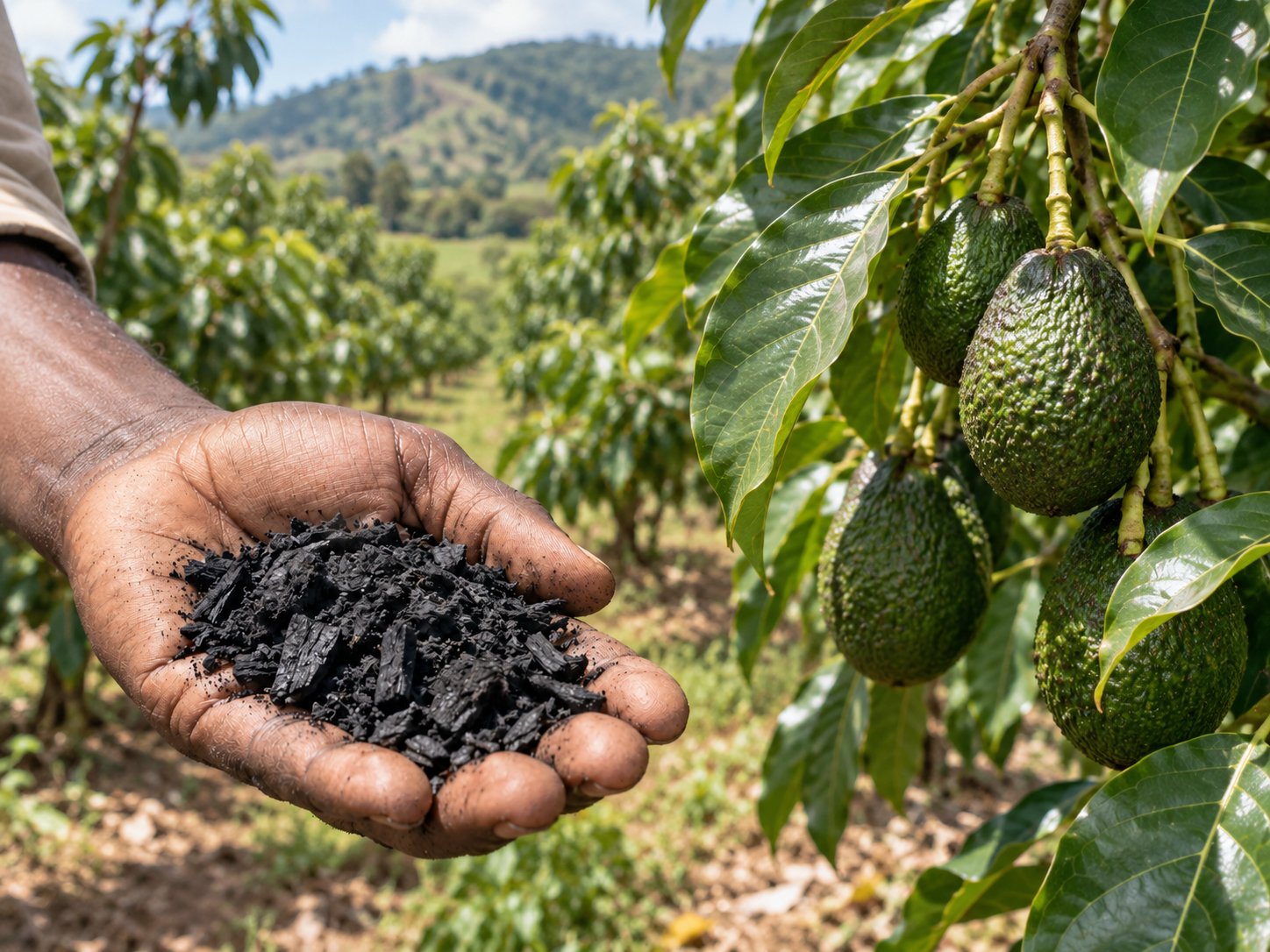
Uganda's Hass avocado grows on acidic, phosphorus-fixing soils with low exchange capacity. Avocado feeder roots have no root hairs and depend on mycorrhizal fungi - biochar's pores are a purpose-built home for that partner, and its porosity drains the standing water root rot needs.
One Hass tree: 7.5 kg foundation dose returns 5x+ over ten years.
Illustrative example, not a guarantee. We run the calculator on your own numbers before you commit.
Download the full Avocado brief (PDF)
Mixed into bedding, it cuts ammonia, smell and disease pressure. In manure, it locks in nutrients for higher-value pasture.
Okulabirira obulungi kuleeta ebirungi.

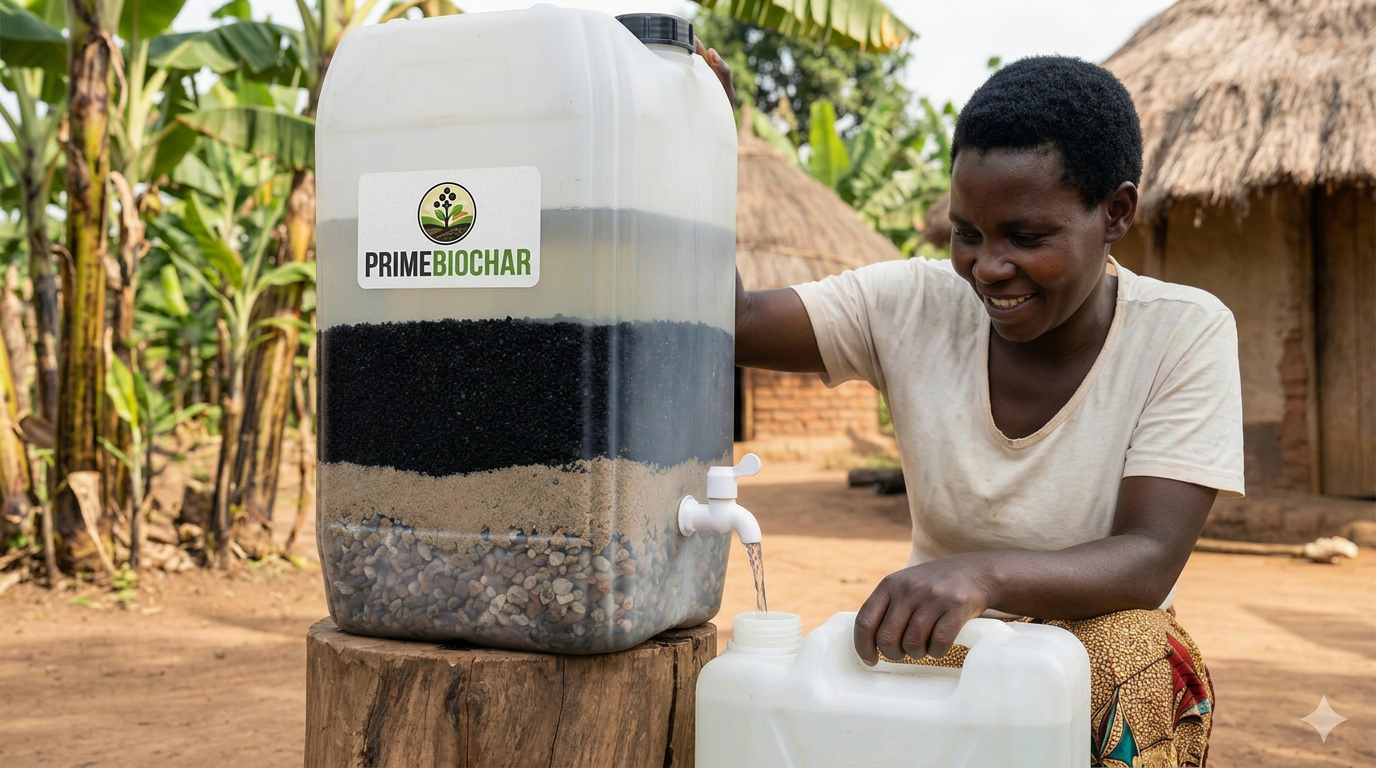
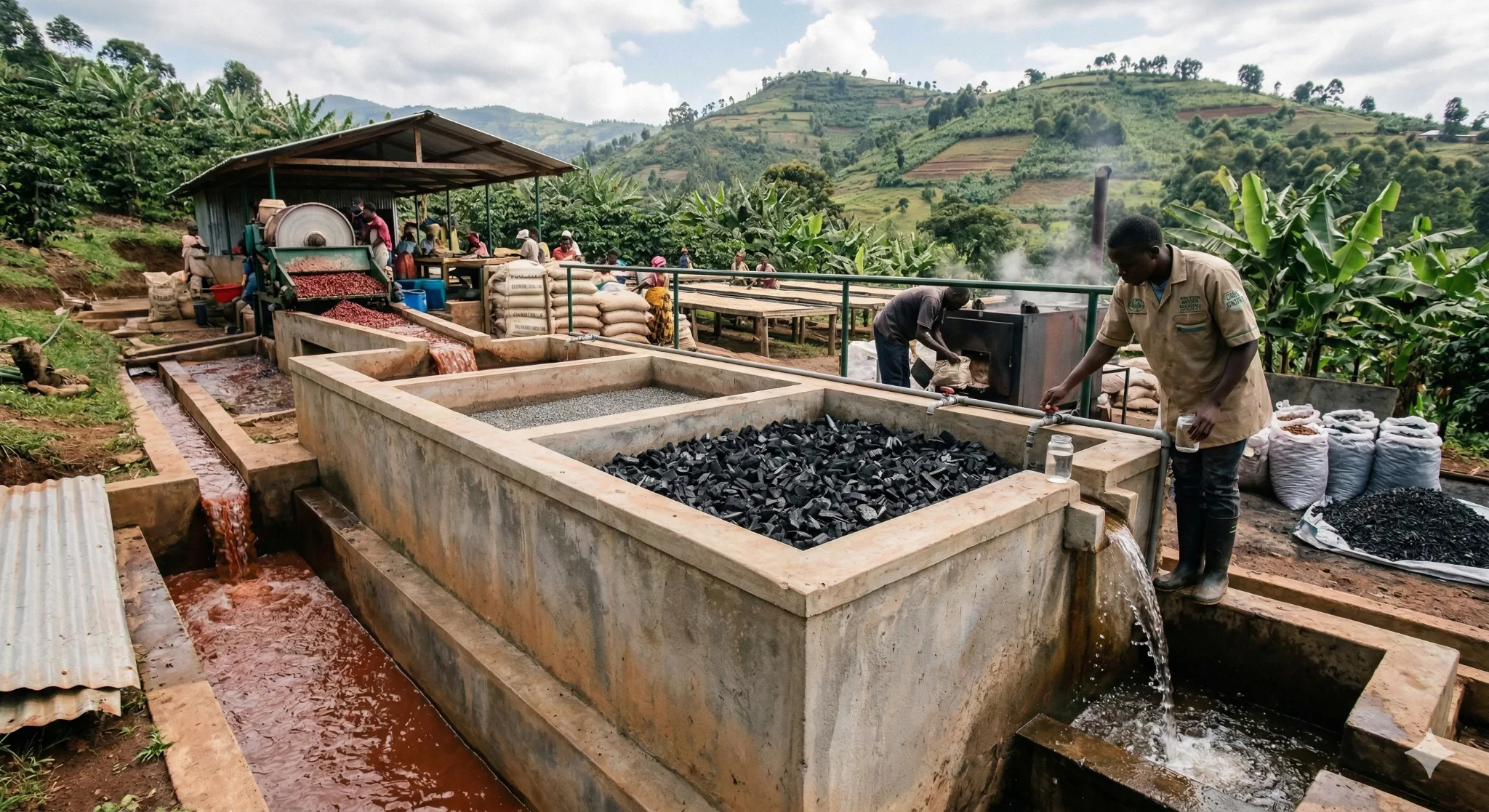
A highly effective filtration medium for community-scale systems - turning locally produced biochar into safe drinking water.
Wamu, tusobola.

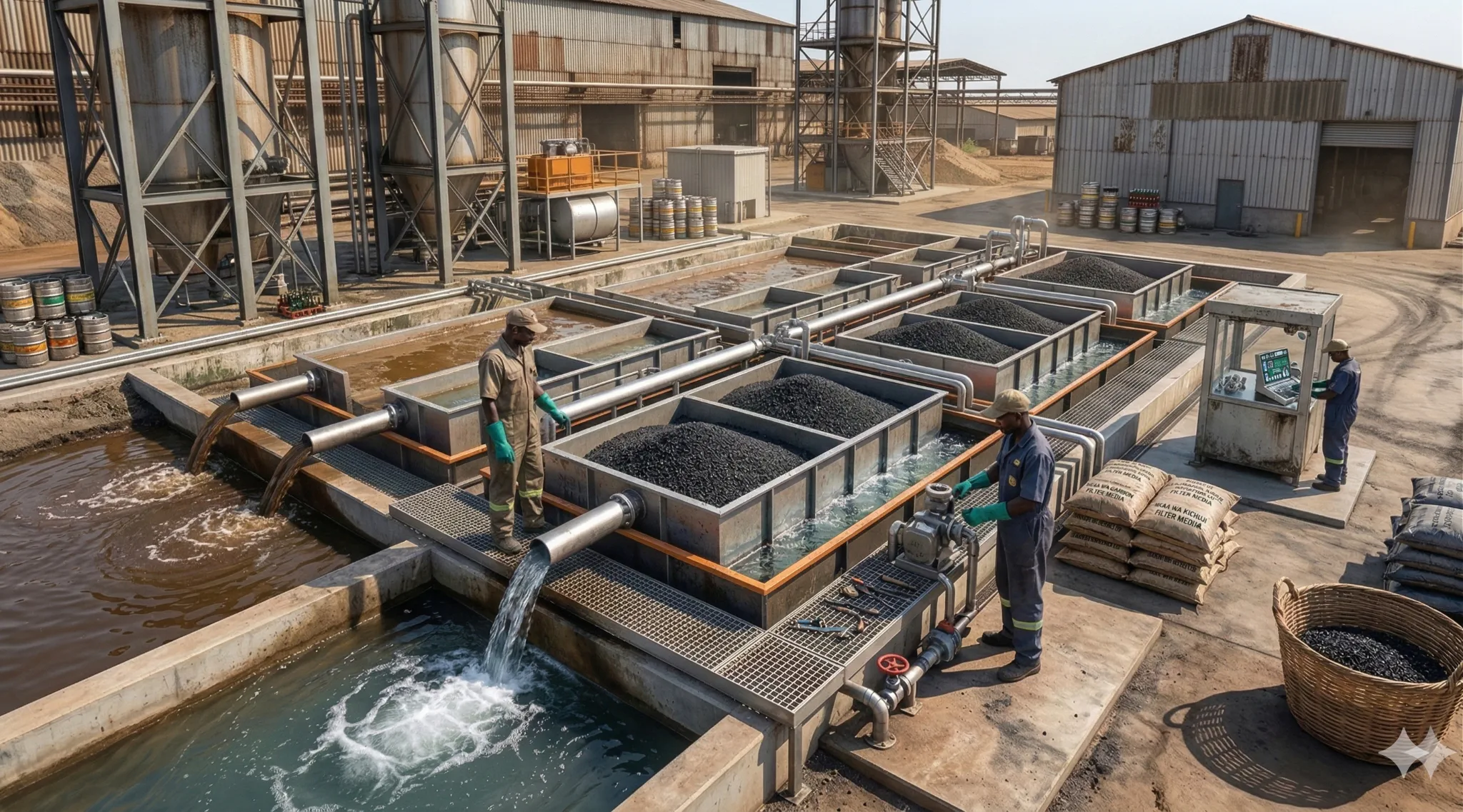
Alkaline granules that neutralise acidic wastewater, absorb fats and manage high organic loads - engineered per facility.
Kuuma obutonde.

Fine-granule carbon with maximum surface area - heavy metals, solvents, dyes and hydrocarbon runoff.
Obutonde bw'ensi y'obugagga bwaffe.
PrimeBiochar turns agricultural waste into a tool for regeneration.
Challenges
Solutions
Decentralised, community-scale systems.
Tap or hover a card to reveal the detail
Charcoal, biochar and activated carbon look alike - but only one is engineered for soil, livestock and water.
Fuel
Made: Wood burnt with little air in simple kilns at 300-500 °C, temperature uncontrolled.
Made for: Cooking and heating.
Quality: Unknown feedstock, varies batch to batch, no certificate.
Risks in use: Tars and
Soil, Livestock & Water
Made: Biomass
Made for: Soil and nurseries, livestock bedding and feed, water and industrial filtration.
Quality: Certified per batch:
Risks in use: When not applied with knowledge it can have adverse effects.
Filter
Made: Charcoal re-heated to 800-1,000 °C with steam or chemicals to open an extreme pore surface.
Made for: Filtering water, air and medicines; deactivating herbicides.
Quality: Industrial grade, very fine powder or granules, costs many times biochar.
Risks in use: Very costly; in soil it adsorbs
PrimeBiochar ships pre-market - UNBS certification in progress

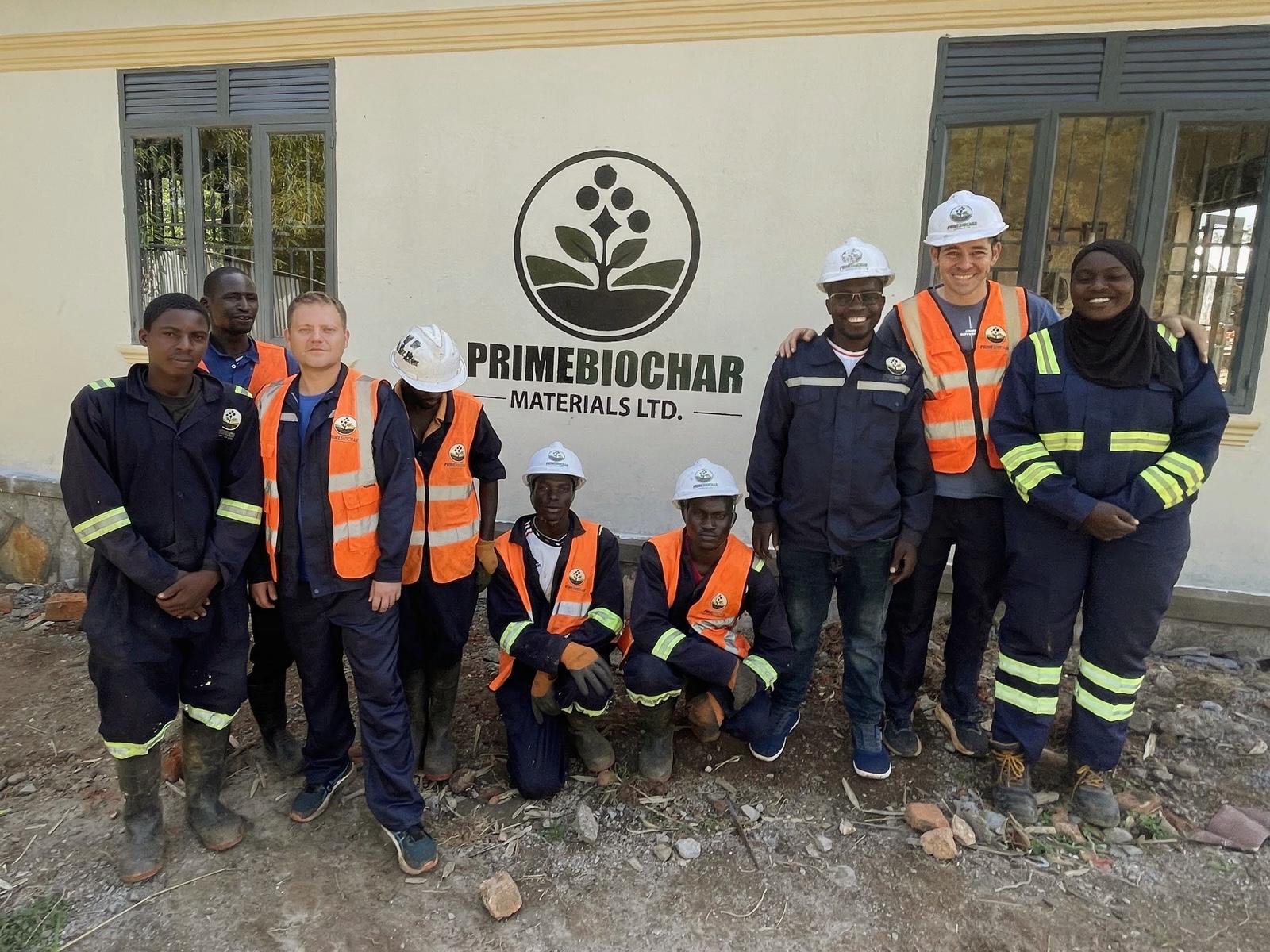
Fig. 06 - The PrimeBiochar team at our facility
We produce premium biochar in Uganda using local agricultural residues and controlled low-emission
Our granules lock carbon into the soil for centuries and make farms more resilient to drought - produced near the farms that use it, together with Ugandan growers and co-operatives.
Tuli wano okukolera awamu.
100%
Ugandan biomass
25+ kg
Bag & bulk supply
Today we ship crop-specific nursery blends. Next: biochar formulations for water, livestock and industry - each tuned to the job.
Available now
In development
In development
In development
In development
All prices on request · MSDS & technical datasheet available · Products in pre-market phase
Tell us about your project - samples, specs or a tailored quote, usually within one working day.
Free quote · No obligation · Trial orders welcome